

A Brief History of Terraces
By Frans Preidel
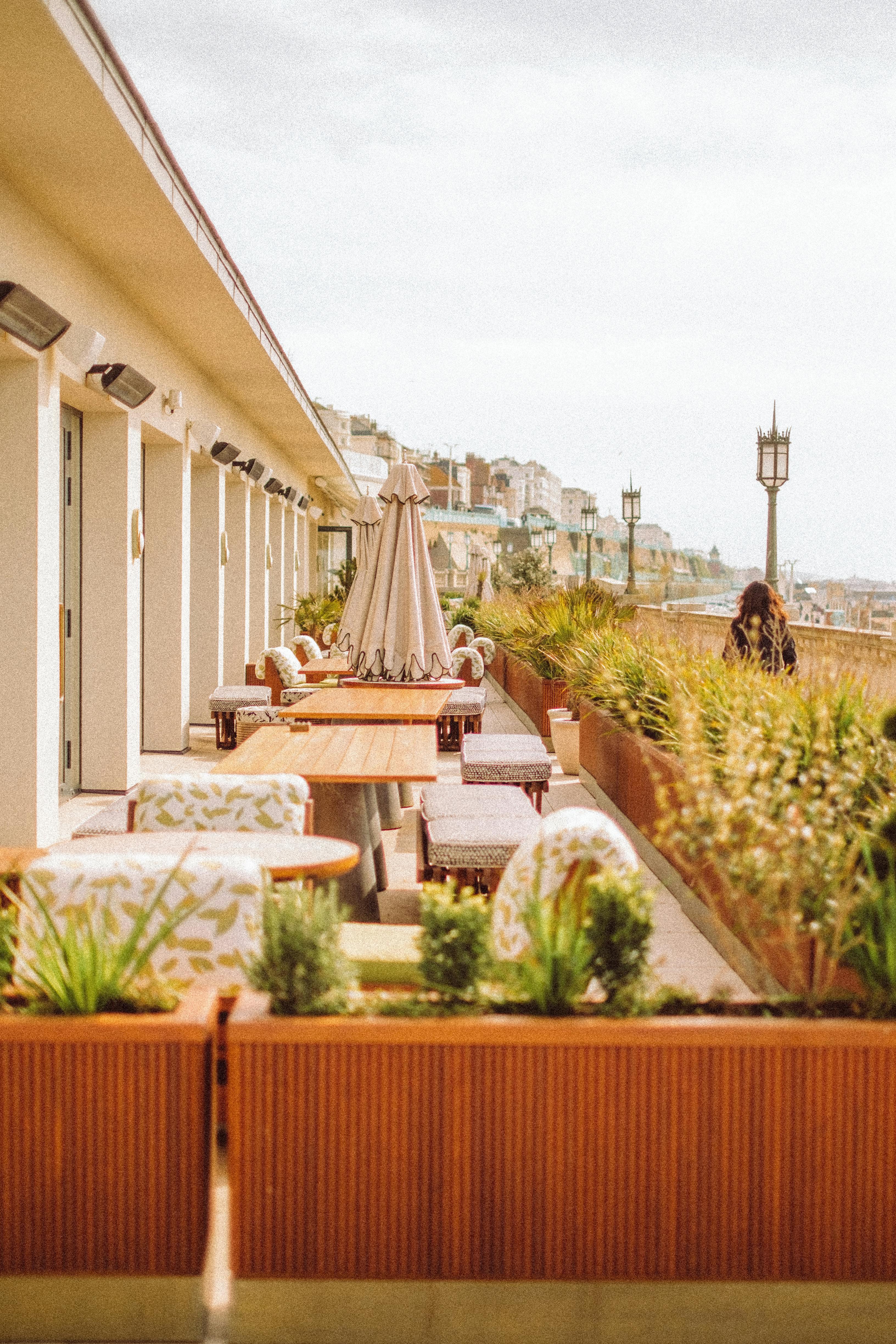
New York has (in our humble opinion) some of the best terraces in the world, but the city was very late to the terrace game—by multiple millennia!
While people around the world have been building and using terraces for the past 12,000 years, New Yorkers have just over a century under our belts. There are lots of surprises in the world’s long history of creating and enjoying terraces—here’s what we’ve learned.
TERRACES IN ANCIENT HISTORY
Did you know humans have been using terraces since long before written history. While we’re focused on residential and social usage, terracing began as an ancient farming method to make use of hilly regions or to grow specialized crops. Terrace farming is still widely used in many parts of the world today.Starting in 9800 BC—yes, almost 12,000 years ago—ancient people across the world realized they could add terraces to their homes and structures as well as their land, with archeological records showing built setbacks and roof terraces dating back tens of thousands of years in the Middle East, Greece, Rome, Cambodia and even on some remote Pacific islands.The most famous architectural terraces in ancient history are King Nebuchadnezzar’s Hanging Gardens of Babylon—planted in a series of setback structures and rooftops, the Hanging Gardens are cited as one of the Seven Wonders of the Ancient World. Unfortunately, while there are multiple written accounts of these gardens, historians have never been able to establish where they were actually located, and definitive archeological evidence has never been found for their existence.
However, we do know that ancient Mesopotamians commonly grew gardens atop ziggurats—terraced temples used for religious purposes—between 3000 BC and 600 BC. There are well-documented archeological records of private villas in the ancient city, Pompeii, with elevated terraces where plants were grown. Somewhat more recently, the medieval Egyptian city of Fustat had several 14-story high-rise buildings with rooftop gardens irrigated by ox-drawn water wheels, and medieval Venice was also using terraces—Venetians adopted private, slat-floored roof terraces called altanas around 1500 AD for laundry and service space. Altanas are still used now, mostly for social purposes.
PUBLIC TERRACES AS NIGHTLIFE DESTINATIONS
Historians cite 1890 as the advent of rooftop terraces in New York City with the opening of a roof garden atop the Casino Theater at Broadway and 39th Street. The brainchild of composer Rudolph Aronson after a visit to Paris (which had popular public terraces already), the rooftop garden on the Casino was designed as a place where patrons could “sit for a time in the open air drink cooling beverages” while an orchestra provided entertainment.Rooftop terraces quickly became wildly popular, with theaters and hotels around the city opening lavish roof spaces to entertain the city’s growing population during sweltering summer months when interior space was unusable.
“Roof garden season,” as one contemporary columnist called it, was fully embraced by the New York nightlife scene in the early 1900s, with establishments competing to create ever-more elaborate and lushly-planted fairylands—complete with waterfalls, swans, pagodas, and more—where wealthy revelers could enjoy evening breezes, tip back stiff drinks and be seen by high society.
Many of the themed rooftops were essentially self-contained amusement parks; at the height of the rooftop craze, the Ansonia hotel even had a fully-functional rooftop farm for guests’ enjoyment. Notable and amusing farm attractions reportedly included the owner’s personal pet pig, goats the guests could play with, a “small” bear and 500 chickens that laid eggs daily for delivery to guests’ rooms.In the 1920s and 1930s, as theatres adopted newly-developed air conditioning technology and early cinema became popular, these public roof gardens fell out of fashion, with terraces instead shifting towards private, residential use.